Number of views: 5 Author: Editor of this site Release time: 2025-04-29 Source: This site
A case overview
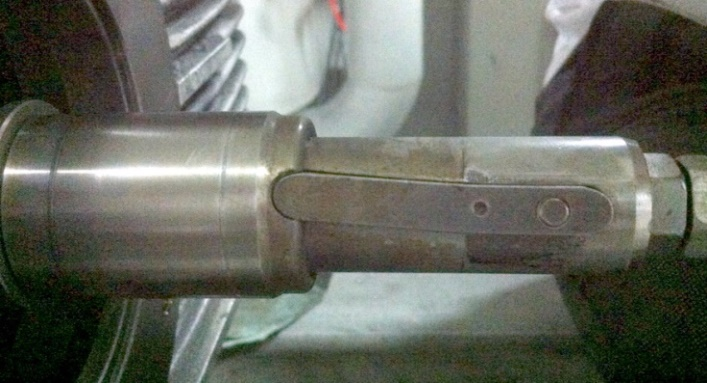
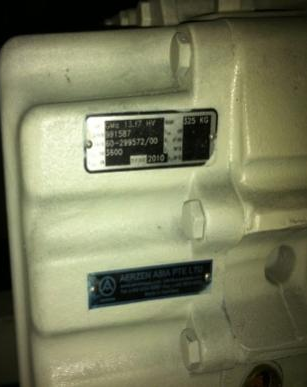
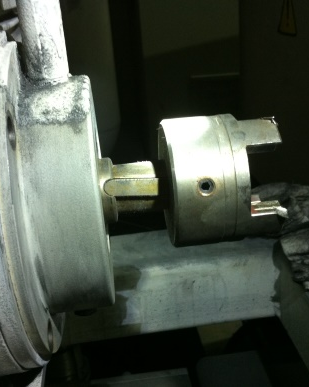
A factory's vacuum pump equipment that had been in operation for two years recently broke down, and the drive shaft head was bent and deformed.
2 Causes of shaft bending & experience gained
After inspection by our maintenance engineer, we found:
1. The vacuum pump has a large load and is overloaded;
2. There are hidden dangers in the starting method of the vacuum pump, and the starting torque has a large impact;
Through this fault analysis, our company has summarized the possible reasons that may cause the vacuum pump shaft to bend:
1. Alignment problem of the connecting flange between the motor and vacuum pump
---1.1 Although alignment is guaranteed through the flange, there may be initial errors during installation (such as flange stop processing error, coaxiality error between the stop outer circle and the axis center line, perpendicularity error between the stop end face and the axis center line), and the vibration generated during operation may further aggravate the misalignment, causing the journal to bear periodic bending stress.
---1.2 Temperature changes when the vacuum pump is running may cause the pump body and motor ends to expand in different amounts, destroying the alignment accuracy, especially under high temperature or cooling conditions.
Lesson Learned: When installing the vacuum pump and motor, check for any signs of wear, improper installation or damage that may affect alignment.
2. Overload and abnormal load
---2.1 Instantaneous overload
The vacuum pump may have a sudden increase in gas pressure due to system blockage, foreign matter entering, or frequent starts and stops, causing the instantaneous torque to exceed the design value.
---2.2 Continuous overload
Long-term operation under overload conditions (such as pumping high-density media or extreme vacuum) will cause fatigue deformation of the shaft.
---2.3 Impact load
The coupling's buffering capacity is insufficient (if a rigid coupling is selected), and the motor's starting torque or sudden change in load is transmitted to the shaft, causing impact deformation.
Experience gained: During operation, pay attention to observe whether the vacuum pump is loaded: look at the current curve, the negative pressure meter reading, the operating parameters of the upstream and downstream pumps, and observe whether there is foreign matter accumulated on the rotor surface in the vacuum pump cylinder.
3. Coupling problem
---3.1 Improper selection: The coupling type (such as rigid elastic gear type) does not match the working conditions and cannot compensate for alignment deviation or absorb vibration.
---3.2 Damage or wear: Coupling components (such as elastic element toothed components) are aged, broken or worn, resulting in uneven transmission of torque.
---3.3 Installation error: uneven pretightening force of coupling locking bolts or too tight key fit, causing additional stress
---3.4 The dynamic balance error of the coupling is large: the drive shaft head generates a large centrifugal force, causing the shaft to bend and deform.
Lessons learned: Review the assembly quality of coupling supporting parts
4. Shaft and keyway design/manufacturing defects
---4.1 Material defects: The shaft material is unqualified (such as insufficient strength and internal cracks) or improper heat treatment (such as residual stress not eliminated)
---4.2 Structural design issues: The shaft diameter is too small and the keyway size is unreasonable (such as too shallow or insufficient transition fillet), resulting in local stress concentration.
---4.3 Processing error: Insufficient keyway processing accuracy (such as poor symmetry and roughness), resulting in poor coordination between the key and the keyway and uneven stress.
Lessons learned: Choose reasonable materials, optimize keyway design, and improve keyway processing accuracy
5. Poor rotor dynamic balance:
The unbalance of the rotor is one of the causes of shaft bending. When the rotor rotates at high speed, if its mass distribution is uneven, a large centrifugal force will be generated. If this force exceeds the elastic limit of the shaft, it will cause permanent bending deformation of the shaft.
Lessons learned: Dynamic balance correction of the vacuum pump rotor before assembly
6. Abnormal vibration of vacuum pump:
The vibration of the main and driven rotors is also an important factor leading to shaft bending. If the rotor vibrates abnormally during operation, it will lead to shaft bending in the long term.
Lessons learned: Pay attention to the vibration during operation of the vacuum pump
7. Bearing failure: The bearings of the vacuum pump lose their positioning function, causing the vacuum pump drive bearing to be overloaded, eventually causing the pump shaft to bend.
Lessons learned: Regular inspection and maintenance are required, and bearings should be replaced in time to prevent failure.
Three methods to solve shaft bending
1. Cold calibration: By calibrating the shaft under low temperature conditions, the cold shrinkage properties of the material are used to adjust the curved part of the shaft to achieve the purpose of alignment.
2. Thermal calibration: by heating the bent part of the shaft to expand it due to heat, and then correct the bending of the shaft through external force or its own cooling and contraction.
3. Hybrid calibration: combine cold calibration and hot calibration methods, and select the appropriate calibration method according to the specific situation to achieve the best calibration effect.
4. Replace, process and repair if necessary: first consider direct replacement. In case of emergency, you can find the coaxiality of the journals at both ends of the rotor, repair the center hole, turn the deformed position + laser cladding + restore the journal size, recheck the coaxiality of the journals at both ends of the rotor, and check the dynamic balance